
The Truth About Selling Your Home for Top Dollar
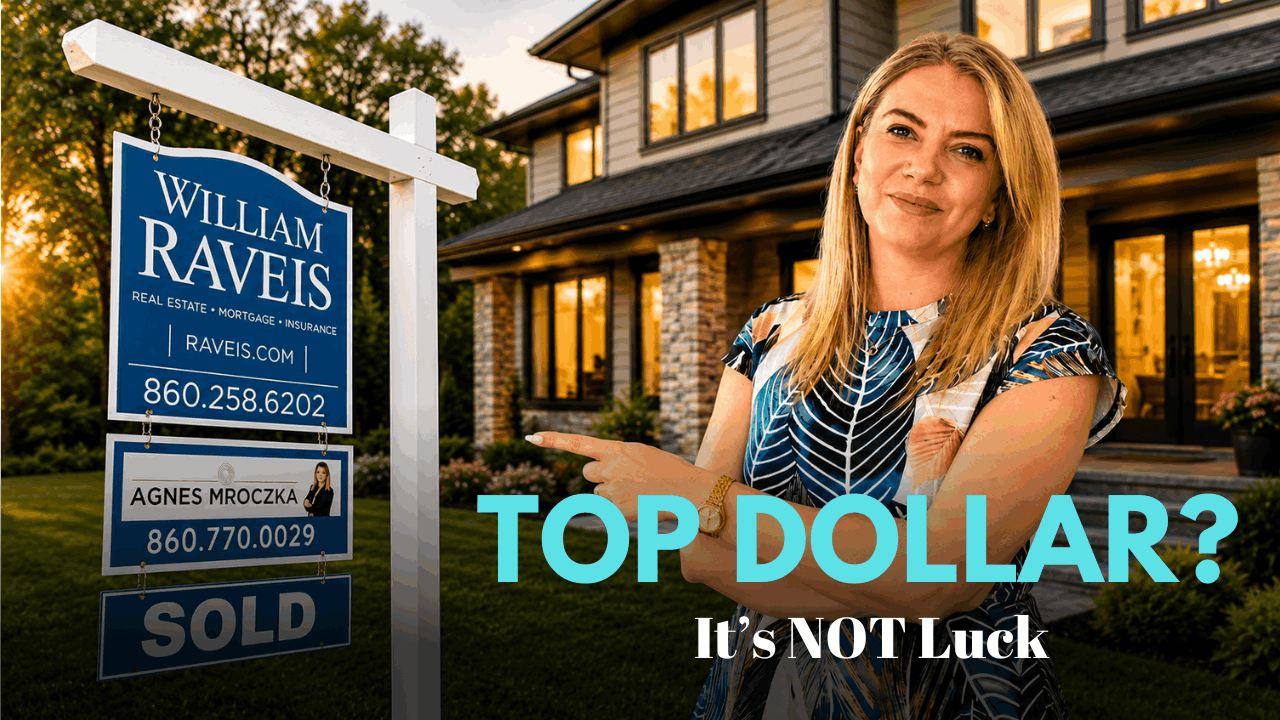
What Actually Sells a Home for Top Dollar (It Isn't Luck)
Have you ever driven through a neighborhood and wondered why two very similar homes sold for completely different prices?
Or maybe you've heard someone say, "It doesn't really matter who you hire — homes sell themselves in this market."
After helping over 100 families buy and sell homes across Connecticut in the past ten years, I can tell you that couldn't be further from the truth.
Selling a home for top dollar isn't about luck. It isn't about timing alone. And it is definitely not about putting a sign in the yard and hoping for the best. There is a strategy behind every successful sale, and your home is likely one of your biggest financial assets — so you deserve to know what actually moves your bottom line.
The market doesn't decide everything
One of the biggest misconceptions in real estate is that a home simply sells for whatever the market decides.
If that were true, nearly identical homes on the same street would always sell for the same price. They don't. I've watched homes with similar square footage, similar layouts, and similar locations sell tens of thousands of dollars apart.
Why? Because buyers don't buy on numbers alone. Buying a home is emotional. People picture raising their family there, hosting the holidays, having coffee on the deck, watching their kids in the backyard. That emotional connection often determines how much someone is willing to pay — and my job is to create it before a buyer ever walks through your front door.
Pricing: where sellers make their biggest mistake
I hear this one all the time: "Let's price it high. We can always come down later."
It sounds logical. It just isn't how buyers behave.
The first week your home is on the market is the most important week you will get. That's when every serious buyer sees it, when agents see it, and when the people who have been waiting for a home like yours finally get notified. You get one first impression.
If buyers think your home is overpriced, many won't even schedule a showing. By the time the price comes down, the momentum is gone. Instead of asking "should we make an offer?", buyers are asking "what's wrong with it?" That is a completely different conversation, and a much harder one to recover from.
Pricing correctly isn't about leaving money on the table. It's about creating demand. Strategic pricing often leads to multiple offers — and multiple offers are what produce the highest sale price.
Buyers fall in love online first
Years ago, buyers drove around neighborhoods looking for sale signs. Today, almost everyone starts online — and they've already judged your home before they step inside it. They've studied the photos, watched the video, and compared your listing to every other home in their price range.
That's why presentation matters so much:
- Professional photography
- High-quality video
- Drone footage where it makes sense
- Floor plans
- A compelling, well-written description
Presentation goes beyond marketing, too. Sometimes fresh paint completely changes how a room feels. Sometimes removing a few pieces of furniture makes a house feel noticeably larger. Sometimes better lighting transforms the whole space. These aren't major renovations — they're strategic improvements that help buyers connect emotionally with your home.
Buyers don't remember every square foot. They remember how a home made them feel.
Putting your home on the MLS is not marketing
Let that sit for a second.
The MLS makes your home available. Marketing creates demand. The more qualified buyers who know your home exists, the better your chances of receiving strong offers — which is why every listing deserves its own custom marketing plan.
Professional photography. Video. Social media. Email campaigns. Printed brochures. Targeted advertising. Open houses. Broker outreach. Every piece works together, and each one reaches a different person. One buyer finds your home on Instagram. Another on YouTube. Another through an email. Another through their own agent.
You never know where your buyer will come from, so the goal isn't to reach a buyer. It's to reach every possible buyer — because more buyers mean more competition, and competition drives value up.
Negotiation starts long before the offer
Most people think negotiation begins when an offer arrives. It actually starts much earlier, because everything you've done up to that point sets your negotiating position.
Think about it. If one buyer is interested, that buyer has leverage. If several buyers want your home, you do. Creating that position is intentional.
And here's another misconception worth clearing up: the highest offer isn't always the best offer.
One buyer is putting 5% down; another is putting 20% down. One has an appraisal contingency; another doesn't. One wants extensive inspection repairs; another is buying as-is. One can close in three weeks; another needs two months.
A good agent isn't only negotiating price. They're evaluating the entire contract to protect your proceeds and remove risk.
Selling a home is hundreds of decisions
This is the part most people don't realize. Selling isn't one decision — it's hundreds of them.
Should we stage? Should we paint? Should we replace the carpet? Should we wait another week to list? Should we accept the first offer or counter? Should we push back after inspections?
Every decision affects the next one, and sometimes the smallest ones make the biggest difference. That's where experience earns its keep — not because someone has held a license for a long time, but because they've guided enough families through enough transactions to spot opportunities and avoid costly mistakes.
When I take on a listing, I don't ask myself, "How do I sell this house?" I ask, "How do I position this home so buyers feel they have to have it?" Those are two very different approaches.
Every home deserves a plan, and every seller deserves honest advice. Sometimes that advice means spending a little money before listing. Sometimes it means doing absolutely nothing at all. Every property is different, so there is no one-size-fits-all strategy — I build the approach around the home, the neighborhood, and today's market.
If you remember one thing
Top dollar isn't created by luck. It's created through preparation, pricing, presentation, marketing, exposure, negotiation, and the hundreds of decisions that happen before, during, and after your home hits the market. Those are the things that separate an average sale from an exceptional one.
If you're thinking about selling your home in Connecticut, I'd be happy to sit down with you, walk through your property, and put together a strategy built around your goals.
Agnes Mroczka, REALTOR® William Raveis Real Estate HomesWithAgnes.com | Instagram @agnes_realestate | YouTube @LivinginCT-Agnes
Categories
Recent Posts









Real Estate Professional License ID: RES.0804073
+1(860) 770-0029 | agnes.mroczka@raveis.com